🎭 What is Creative Drama? Learning Through the Power of Imagination
Creative Drama 101: Learning While Having Fun
Introduction
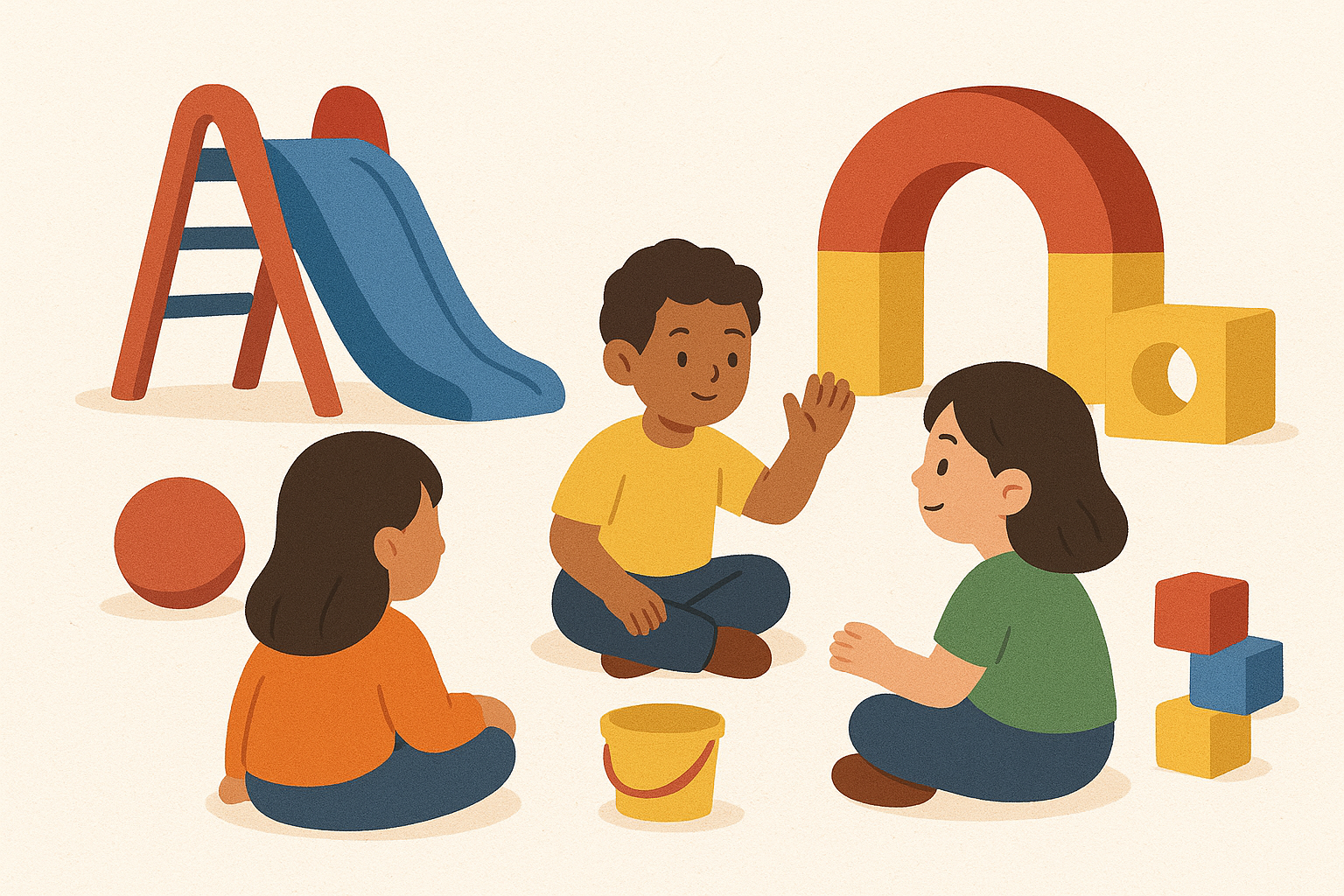
Have you ever watched a child turn an ordinary moment into a whole new world? A chair becomes a ship, a blanket transforms into a cape, and the corner of a room turns into a stage. This is where creative drama finds its roots—in imagination.
Creative drama is not simply theater. Through games, improvisation, and group work, it allows participants to express themselves, communicate, and expand their imagination. More than performance, it is an educational method that fosters thinking, feeling, and self-expression.
What is Creative Drama?
Creative drama is a participant-centered learning process where individuals express themselves through improvisation, role play, and dramatic enactment.
Theater requires a stage, an audience, and a script.
Creative drama, however, can happen anywhere—a classroom, a workshop, or even an open space. No script is needed; participants build the process themselves.
This approach, especially with children, nurtures the ability to think, feel, and express in a holistic way.
The Origins of Creative Drama
The foundations of creative drama go back to the early 20th century, when educators began to recognize the power of play in learning. They realized that learning should not be confined to textbooks but should also come alive through experience.
By the 1970s, creative drama had taken root in many countries, including Turkey, where it became a significant part of education and personal development practices. Today, it is widely used in schools, workshops, and adult education.
How is Creative Drama Practiced?
A creative drama session usually unfolds in three stages:
1. Warm-up and Relaxation
The group builds trust and comfort through games, simple movements, and exercises.
2. Enactment and Improvisation
Participants explore a theme or concept through improvisation. For example: “justice,” “friendship,” “love of nature.” Roles shift, and different perspectives are experienced.
3. Reflection and Sharing
At the end of the session, participants come together to reflect:
“What did we feel during this process?”
“What did other perspectives teach us?”
“How can we use these experiences in real life?”
The Benefits of Creative Drama
1. Imagination and Creativity
Ordinary objects take on new meanings, and new scenarios come to life.
2. Confidence and Self-Expression
Even without a stage or rehearsals, children learn to make their voices heard through improvisation.
3. Communication and Empathy
Stepping into another role helps participants develop empathy and see the world from different perspectives.
4. Collaboration and Teamwork
Creative drama is built together. Every contribution matters, and the process is shared.
5. Critical Thinking
Dramatizing a concept encourages both emotional and intellectual exploration.
“Creative drama gives children the chance to rehearse for life.”
Is Creative Drama Only for Children?
Absolutely not.
Creative drama is also a powerful tool for adults. It can be used to:
strengthen communication skills,
develop leadership and problem-solving abilities,
reduce stress,
and boost confidence.
Creative Drama and Education
Many schools today integrate creative drama into their lessons. Why? Because knowledge doesn’t stay in the book—once it’s enacted, it becomes lasting.
Examples include:
Reenacting historical events to build empathy in history classes.
Using improvisation to improve communication in language learning.
Exploring scientific concepts through playful dramatization to make them easier to understand.
Conclusion
Creative drama is not only about playing games—it encourages reflection, empathy, expression, and transformation.
A chair can become a ship, a table can turn into a courtroom, and an empty space can hold an entire world. This transformation makes learning come alive.
“Creative drama is the art of turning imagination into reality.”
Author:
Birci Çavuş