🌱 What is P4C? The Power of Philosophy for Children
P4C-101: A brief introduction for Philosophy for Children
Introduction
Thinking, asking questions, and being curious are part of human nature. When children encounter the world for the first time, they try to make sense of it with their questions: “Who am I?”, “What is time?”, “What is justice?”, “What happens after death?”…
This is where P4C (Philosophy for Children) comes in. It nurtures this natural curiosity, aiming to develop children’s critical, creative, and empathetic thinking skills.
The goal is not to give children ready-made answers, but to accompany them on their journey of thinking, help them see different perspectives, and empower them to express themselves with confidence.
The Origins of P4C
The P4C approach was developed in the 1960s by American philosopher and educator Matthew Lipman.
Lipman observed that children in schools were often directed toward rote learning. But he believed the real need was to teach children how to think.
Over time, his method spread across many countries, and today P4C is practiced in schools, workshops, and educational programs worldwide. It’s not just a lesson—it’s a way of thinking that children can carry with them for life.
How is P4C Practiced?
At the heart of P4C is asking questions. A session usually follows these steps:
Choosing a Stimulus – A story, picture, film clip, game, or poem is shared to spark curiosity.
Curiosity and Questions – Children generate their own questions from the stimulus. Example: “Does justice work the same for everyone?”
Selecting a Question – The group decides together which question to explore.
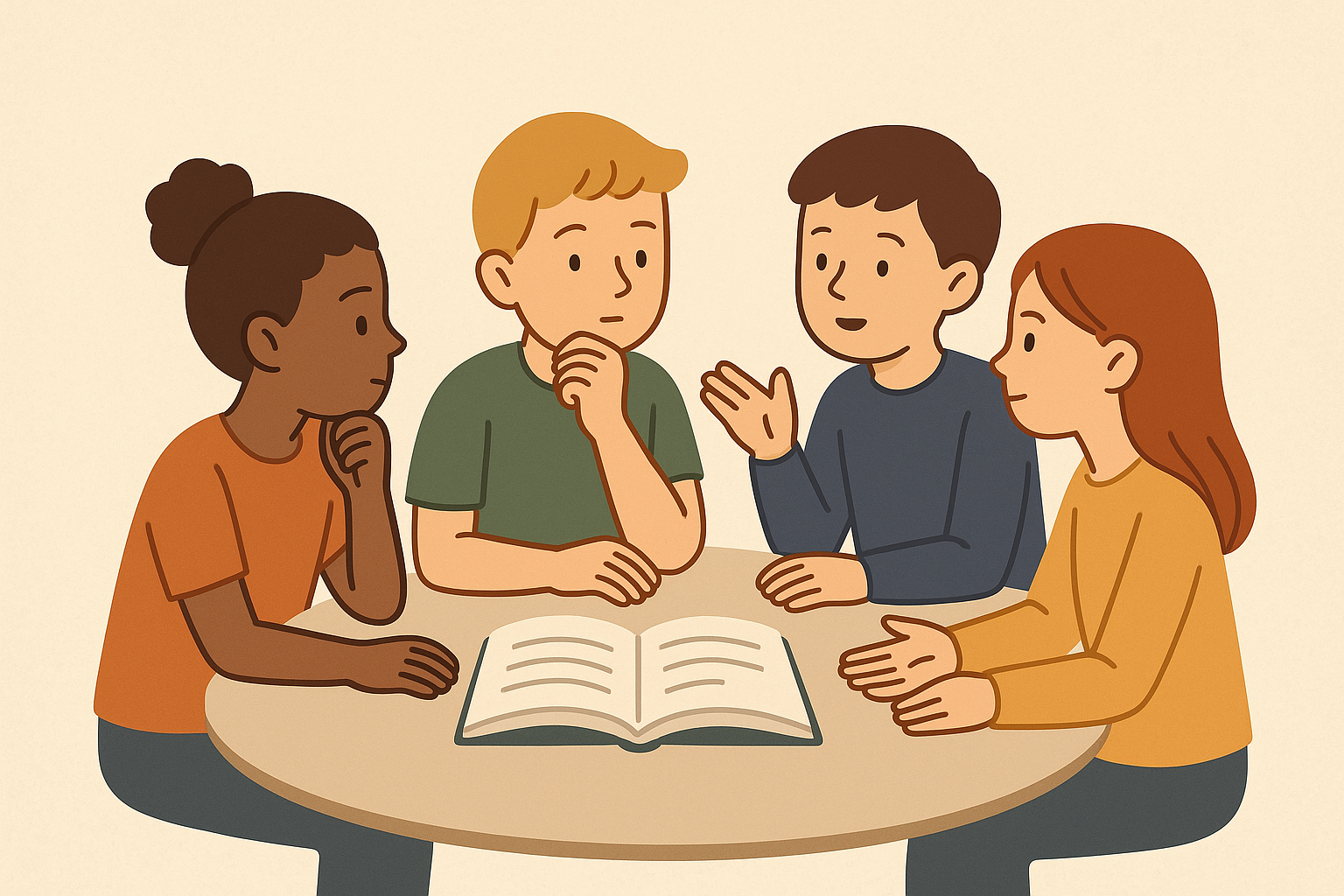
Community of Inquiry – Participants share their thoughts in turn, listen to each other, and debate opposing ideas.
Reflection – At the end, children share what they learned, what ideas changed, or which ones became stronger.
Here, the facilitator (often a teacher) is not the one with the “right answers.” Instead, they act as a guide, encouraging children to think in new directions.
The Benefits of P4C for Children
1. Critical Thinking Skills
Children learn not to accept things at face value but to question them. Asking, “Why do I hold this belief?” builds disciplined thinking.
2. Creative Thinking
Exploring different perspectives encourages children to generate new ideas and unleash their imagination.
3. Empathy and Respect
By listening to and understanding different viewpoints, children develop respect for others.
4. Confidence
Expressing their own thoughts and responding to opposing ideas strengthens communication skills and self-confidence.
5. Democratic Culture
P4C sessions are like small democracies in action—everyone’s voice matters, and everyone has equal opportunity to speak.
“The essence of P4C is not giving children ready answers, but walking alongside them as they think.”
P4C for Adults
P4C is not only for children.
Workshops for adults help participants notice their own thought patterns, break away from fixed ideas, and engage in deeper reflection.
In professional settings, P4C can support:
decision-making,
communication,
and creativity processes.
Why P4C?
The world today is changing rapidly—technology, information flow, social relations—everything evolves at lightning speed.
Children need more than memorized knowledge; they need the ability to question, interpret, and evaluate information through an ethical lens.
P4C equips them with a lifelong skill of thinking.
“Every question opens a new path; in this journey, P4C is not a compass, but a guide.”
Conclusion
P4C reminds both children and adults of the same truth: to ask questions, to think, and to share is at the heart of being human.
Philosophy for Children is not confined to the classroom—it’s a practice for life. As children search for answers to their own questions, they rediscover the world anew.
And perhaps most importantly, P4C shows us that:
“Thinking is the most powerful way of being together.”
Author:
Birci Çavuş